Gandhi’s life and his work in brief.

- Who was Mahatma Gandhi?
| Born | Mohandas Karamchand Gandhi 2 October 1869 Porbandar, Kathiawar Agency,British Indian Empire[1] (now in Gujarat, India) |
|---|---|
| Died | 30 January 1948 (aged 78) New Delhi, Delhi, India |
| Education | barrister-at-law |
| Children | Harilal Manilal Ramdas Devdas |
| Parents |
|
| Signature | |
 | |
Mohandas Karamchand Gandhi 2 October 1869 – 30 January 1948) was the preeminent leader of the Indian independence movement in British-ruled India. Employing nonviolent civil disobedience, Gandhi led India to independence and inspired movements for civil rights and freedom across the world.
- Her Family
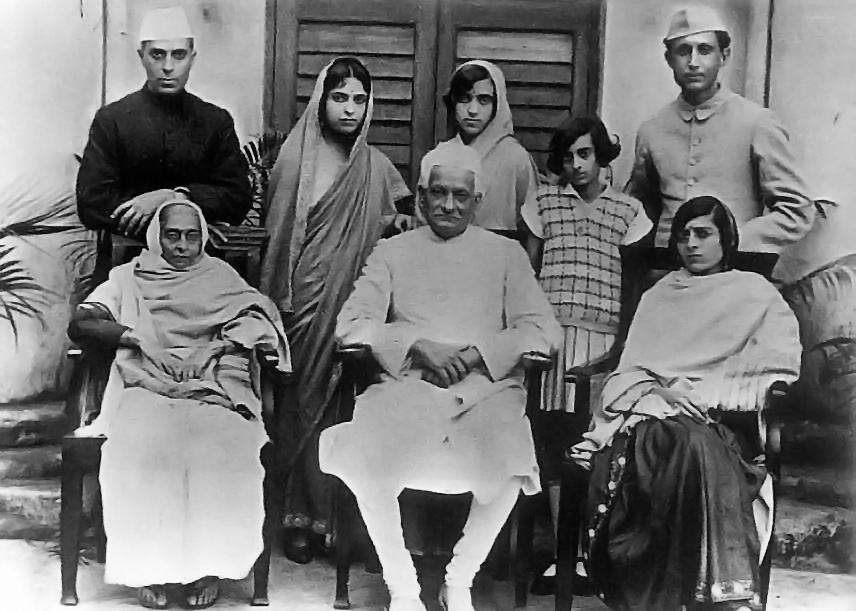
The Nehru–Indira Gandhi family is a prominent Indian political dynasty. Their political involvement has traditionally revolved around the Indian National Congress. Members of the family have traditionally led the Congress party and the Republic of India since independence.
 Birth and Parents
- Early Influences
- Schooling
Ans:At school, first the primary at Porbandar, and later the Albert High School, Rajkot, Gandhi showed no particular brilliance, played no games, avoided company. He read little beyond text books, but respected his teacher, though, even at his biding, he would not copy from his neighbour’s answers.
- Service in hour of need
Ans:Gandhi combined his opposition to wrong with the compassion for the wrong-doer. During the Boer war and the Zulu rebellion he helped the Government at the hour of its need, by raising Indian Ambulance and Stretcher-bearer Corps which served close to the line of fire. Gandhi was awarded medals for this service.
- The Indian struggle
Ans:The Natal India congress founded by Gandhi in 1894, on lines similar to the Indian National Congress, and later the British Indian committee in the Transvaal fought against restriction on Indian trade, movement and residence. During the campaign against the ‘Black’ Registration Act, Gandhi lit a grand bonfire of thousands of the registration certificates.
- The Mahatma Leaves
Ans:The Indian relief passed, Gandhi decided to return to India. After receiving farewell tributes, the Mahatma left South Africa in July 1914. When in England, enroute home, the great war broke out. Gandhi helped to raise an Indian Volunteer Corps. In December, Gandhi and Kasturba sailed for India.
- Non-cooperation is Born
Ans:The Indian National Congress at Calcutta approved of non-cooperation: boycott of law-courts, government educational institutions and foreign goods. Gandhi saw it as the only alternative to violence for redress of the Khilafats and the Punjab wrongs. The founding of Gujarat Vidyapith in November 1920 was a symbol of the national re-awakening.
- Wheel of Time
Ans:And so the Wheel of time turned on. Gandhi’s use of the bicycle- a rare performance in order to be punctual at a meeting – indicated the lengths he was ready to go. And his constant companion, the spinning wheel, remained with him wherever he went, an instrument which spun the destiny of the country and symbolised his identification with the poor.
- Dandi March
Ans:Small though the chosen band, its 200 mile march to the sea recalled the other "Great March" of 1913 Gandhi had led in South Africa. He had sent viceroy Irwin an "Ultimatum" before embarking on civil disobedience. On "bended knees" he had asked "for bread and received a stone instead". On the night of may 5, 1930, they stole up to him like thieves in the night and arrested him
- Friends Every Where
Ans:At Suez, port side, Gandhi received Egypt’s greetings, met Indian deputations, talked to journalists. At Marseilles he met European friends, like Deenbandhu C. F. Andrews. Arriving in London on September 12, Gandhi and party proceeded to the East End, the quarter of the poor coal miners and factory hands, lived in their midst at Kingsley Hall, managed by Muriel Lester, his English hostess.
- Meeting the people
Ans:Scotland Yard had provided two top detectives to guard him, but he needed none. Wherever Mahatma went, children and women, simple folk and sophisticated gentry flocked round him, as when Charles Chaplin, the famous comedian, called. And it is on record that it was Gandhi who made him laugh.
- Talking to Leaders
Ans:Gandhi met many groups of intellectuals, social workers and students. Addressed many meetings. He visited coal miners cottages, east end children celebrated his birthday with candles and cakes, leaders of all shades of thought-social, political, religious- discussed India with him; for instance, the "Red Dean" of Canterbury, Dr. Hewlett Johnson.

